Part 1 of the overlooked factors in Counter-UAS System evaluation examines the detection and operational foundation of counter-drone systems that influence long-term effectiveness. It covers capabilities, centralized command and control, deployment flexibility, setup efficiency, and open architecture considerations.
Counter-drone professionals confront an increasingly complex and congested airspace, with rogue drones disturbing airports, critical-infrastructure, border-adjacent environments, stadiums and arenas, and other sensitive operations. Decision-makers are under pressure to select C-UAS solutions that deliver effective protection while minimizing collateral damage and operational disruption.
The decision to invest in counter-UAS technology represents more than acquiring equipment, it establishes the foundation for protecting operational continuity, maintaining safety protocols, and preserving situational awareness in sensitive environments. Making informed adoption decisions requires counter-drone professionals to systematically evaluate detection capabilities, operational requirements, system architecture, and long-term viability.
Below are five often-overlooked factors that inform evaluation, procurement and support for responsible, future-ready C-UAS adoption. These are not just “checklist questions,” but core considerations that can determine whether a C-UAS program succeeds or falls short in maintaining safe, controlled, and continuous operations.
1. What detection capabilities does the system provide?
Systems employing RF cyber detection technology, such as that by D-Fend Solutions’ EnforceAir, offer distinct advantages as they not only detect the rogue drone but also provide location tracking by accurately determining drone and pilot position. This intelligence proves invaluable for comprehensive threat assessment and response coordination. Organizations operating in complex environments benefit from this dual-detection capability, as understanding both drone and pilot locations enables more strategic security responses.
Some environments require a multilayer detection approach that combines multiple sensing layers into one fused operational picture. D-Fend’s EnforceAir PLUS is a cyber-driven, multilayer, AI-enhanced counter-drone system composed of foundational RF-cyber detection and takeover technology, integrated with auto-calibrated radar detection. Its AI-based SmartAir fusion engine combines data from RF-cyber and radar sensors into a unified view of each detected drone, providing more information on each detected drone and minimizing false positives.
Counter-drone professionals should require vendors to specify detection parameters explicitly, including supported communication frequencies, and performance metrics. They should also assess how intuitively this information is presented in the system’s user interface to support rapid decision-making.
2. Can the Counter-UAS system provide operators with a single, holistic operational picture while managing multiple counter-drone deployments across large areas?
Securing large, complex environments such as airports, borders, and critical infrastructure sites often require multiple counter-UAS deployments to achieve effective coverage, which can increase operator workload and operational costs. Managing several systems simultaneously may also create coordination and integration challenges, making it harder for security teams to maintain clear situational awareness. D-Fend Solutions’ Multi-Sensor Command & Control system (MSC2) addresses this need by serving as a central management platform that remotely controls multiple EnforceAir systems from a single server, facilitating expanded and uninterrupted coverage for rogue drone detection and mitigation without increasing operator headcount. By aggregating information from all connected sensors, MSC2 creates one unified operational picture, automatically eliminates duplicate tracks when multiple sensors detect the same drone, and selects the optimal unit to initiate mitigation after factoring traffic, parameters, and ranges.
An important, and often overlooked, consideration is how well the multi-sensor environment supports operational workflows: can operators see a single, coherent air picture, or are they forced to switch between multiple screens, systems, or data feeds?
3. What configurations are required? Is the C-UAS technology stationary or mobile, and can mobile systems operate while moving?
Operational flexibility increasingly determines C-UAS effectiveness across diverse scenarios. Counter-drone professionals must align system architecture with operational requirements, considering both current needs and future operational scenarios.
Organizations requiring deployment flexibility across multiple configurations benefit from systems offering multiple configurations, such as what EnforceAir’s Seamless Operational Flexibility (SOF) provides. It enables rapid switching between tactical, vehicular, stationary, and man-portable deployments using multi-use kit bundles. This adaptability allows security teams to optimize deployment based on evolving threat conditions while maintaining consistent operational capabilities across configurations.
Beyond the basic question of “stationary versus mobile,” organizations should examine whether the C-UAS platform maintains full detection and mitigation performance while on the move, and how easily teams can transition between configurations without interrupting protection.
4. How many people does it require to set up and deploy the C-UAS at a new site and how long does setup take?
Deployment efficiency directly impacts operational readiness. Counter-drone professionals must consider realistic deployment timelines, personnel requirements, and training investments when evaluating C-UAS technologies. Systems requiring extensive setup procedures, multiple operators, and specialized technical knowledge create operational bottlenecks that undermine response effectiveness.
Organizations should require vendors to demonstrate actual deployment procedures under realistic conditions, including personnel requirements, equipment preparation, system initialization, and operational verification.
D-Fend Solutions’ EnforceAir provides a high degree of operational agility and flexibility through core elements that can be easily transferred, mounted and configured within minutes. This enables personnel to go anywhere, at any time and increases operational readiness.
An additional overlooked factor is the ongoing operational burden: how much time and effort are required for reconfiguration, relocation, and updates during day-to-day operations, and can a small team reliably sustain protection over time?
5. Does the system have an open architecture and does it enable interoperability?
Each operational environment has its own unique requirements. Interoperability and open architecture enable organizations to customize capabilities, integrate emerging technologies, and adapt systems as operational requirements evolve.
Interoperability enables a Counter-UAS system to operate seamlessly alongside complementary technologies and existing command-and-control platforms. By supporting an integrated operational framework, this approach enables decision-makers to apply graduated response options instead of depending on a single standalone capability.
Open architecture uses modular, standards-based components that can evolve over time. It enables scalability which in turn allows new modules or capabilities to be introduced without the need to replace the entire solution, preserving existing investments as operational demands grow. At the same time, vendor flexibility gives enterprises and organizations the freedom to select from multiple options for certain components. As the threat landscape evolves, this modular approach also supports better software and hardware upgrades, enabling systems to integrate efficiently over time.
Organizations should look beyond “open” systems specifications and drill down into practical integration examples, APIs, and field-proven interoperability with existing command-and-control, sensor, and communications platforms.
Preparing for Tomorrow’s Threats While Addressing Today’s
As organizations evaluate C-UAS options, they must balance immediate operational needs against future threat evolution. Future-ready C-UAS platforms share common characteristics:
Adaptable architecture supporting integration of emerging sensors and effectors
Software-defined capability enabling rapid updates without hardware replacement
Open standards preventing vendor lock-in and obsolescence
Organizations should evaluate not just current capability but vendor commitment to continuous evolution. Those investing in research, maintaining update cadence, and demonstrating responsiveness to emerging threats provide better long-term value.
The path forward requires counter-drone professionals to engage deeply with technology, understand operational implications, and maintain focus on mission effectiveness. By concentrating on these often-overlooked factors, stakeholders can make more informed decisions grounded in real-world performance, operational fit, and long-term resilience, while preserving control and continuity in even the most sensitive environments.
Counter-drone professionals navigating C-UAS evaluations benefit from systematic evaluation frameworks addressing detection capabilities, operational requirements, human factors, and architectural considerations. Part 2 of this series examines mitigation technologies, performance validation, maintenance considerations, and establishing future-ready C-UAS programs aligned with organizational security objectives.
FAQ
What should organizations evaluate first in a Counter-UAS system?
Detection capability is foundational. Organizations and counter-drone professionals should assess supported communication frequencies, drone and pilot location visibility, performance metrics, and clarity of the operational interface.
Why is a unified operational picture important in C-UAS deployments?
Large environments often require multiple deployments. A centralized command and control structure enables operators to view a single operational picture and manage coverage without switching between disconnected systems.
How does deployment efficiency affect Counter-UAS readiness?
Setup time, personnel requirements, and reconfiguration effort directly influence operational agility. Systems that can be transferred, mounted, and configured quickly support sustained protection.
Why does open architecture matter in Counter-UAS system evaluation?
Open architecture and interoperability allow integration with existing command-and-control platforms and support modular upgrades as operational requirements evolve.
What defines a future-ready Counter-UAS system?
Future-ready platforms demonstrate adaptable architecture, scalable performance, software-defined capability, and open standards that support long-term operational evolution without requiring full system replacement.
Boaz Shor is a Pre-Sales Solution Engineer at D-Fend Solutions. He joined D-Fend following leadership roles in both business and military environments, bringing a unique and disciplined perspective to customer engagement. Boaz thrives in complex scenarios and plays a key role in demonstrating EnforceAir’s capabilities. He is passionate about fostering professional, collaborative learning experiences that support informed decision-making and successful solution adoption.
Subscribe to email updates
Sign up here to receive the latest news, upcoming events, webinars and industry best practice resources

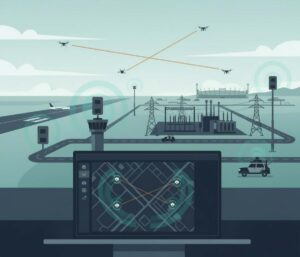 The decision to invest in counter-UAS technology represents more than acquiring equipment, it establishes the foundation for protecting operational continuity, maintaining safety protocols, and preserving situational awareness in sensitive environments. Making informed adoption decisions requires counter-drone professionals to systematically evaluate detection capabilities, operational requirements, system architecture, and long-term viability.
 Subscribe to email updates