
The Counter-Drone Drill
D-FEND SOLUTIONS BLOG
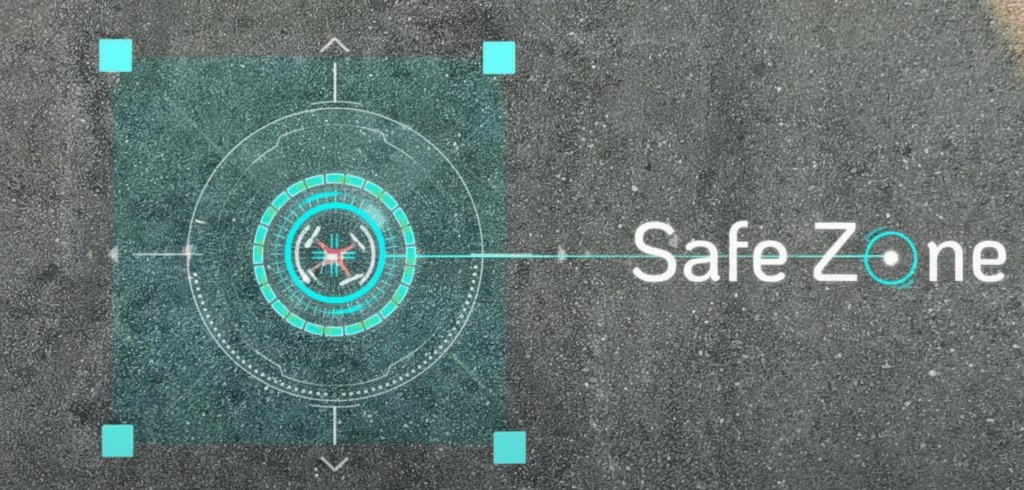
A dangerous drone incident isn’t resolved at detection, rather, it is fully resolved only when a safe outcome has been achieved. One ideal safe outcome is having the rogue drone under control and safely landed in a designated zone.
Across the globe, major drone threats are becoming increasingly evident, from unauthorized airspace violations to criminal activity and surveillance threats. For example, on November 1, 2025, officers in the United States stopped a drone smuggling contraband into Washington State Prison, triggering a pursuit and resulting in three arrests. On November 11, 2025, an unidentified drone conducted repeated flights over the Mulhouse railway station in France above a convoy of Leclerc tanks. Just days later, on November 13, 2025, a drone operating over Durham’s Lumiere festival breached a temporary flight restriction and was seized by authorities, reflecting the growing urgency of addressing drone misuse worldwide.
For counter-drone professionals tasked with protecting complex, high-stakes environments, the true test of operational readiness is demonstrated in the safe, predictable, and controlled resolution of each drone incident. As drone activity increases, safe drone mitigation and the ability to direct rogue drones into pre-defined safe landing zones has become an essential means for delivering safe, confident outcomes.
The most risk-intensive phase of a drone incident occurs during the resolution. Traditional mitigation methods create uncertainty and introduce new operational hazards:
The fundamental question facing security personnel isn’t simply “Can this drone be stopped?” but rather “Can it be stopped safely, predictably, without causing collateral damage or operational disruption, and how can modern counter-UAS solutions support controlled, low-risk outcomes?”
Effective implementation of pre-defined safe landing zones requires integration with broader security protocols and multi-agency coordination. EnforceAir, D-Fend Solutions’ RF cyber-takeover C-UAS system, integrates safe drone landing zones into the wider security ecosystem by enabling controlled takeover and guided recovery of unauthorized drones. EnforceAir’s open API architecture enables seamless connection to command and control, law enforcement networks, and other relevant applications and systems.
Beyond visual line of sight (BVLOS) operations, emerging air mobility initiatives will soon share airspace with traditional aviation. This evolution makes the ability to distinguish authorized from unauthorized drones and to resolve threats without disrupting legitimate operations which is not just a security enhancement but an operational imperative. Safe landing zones represent a critical component of this future-ready approach. They provide the spatial and operational foundation for managing drone incidents while maintaining continuity and asset protection.
A designated safe landing zone represents more than just a location. It reflects a key element of a layered, proactive defense strategy designed to deliver safe and controlled outcomes. With these zones established in advance, security teams gain several critical advantages:
Maintain Operational Continuity: Threats can be better isolated without halting air traffic, border operations, industrial processes, or public activity. Flights, for instance, continue while the rogue drone is guided away from runways into a controlled recovery area, provided that the drone is sufficiently distanced from the sensitive airspace.
Enable Rapid Response: Pre-defined landing zones remove hesitation during time-critical incidents. Operators know exactly where to guide a drone the moment it is identified as a threat, speeding up time-critical decisions.
Facilitate Evidence Preservation: Landing a drone intact preserves critical forensic evidence. The drone itself, along with any payload, memory cards, or identifying information, remains available for investigation, as allowed by local regulations. This capability proves essential for identifying repeat offenders, understanding operator intent, and building legal cases against malicious actors.
Minimize Collateral Risk: Designating landing zones away from people, aircraft, vehicles, and critical infrastructure, organizations provide buffers that protect both assets and individuals. This surgical precision distinguishes modern counter-unmanned aerial systems (C-UAS) systems from blunt-force approaches that prioritize neutralization over safety.
D-Fend Solutions’ EnforceAir C-UAS system solves the safe landing challenge with advanced radio frequency (RF) cyber-takeover technology, empowering users with full autonomous control over unauthorized drones. Unlike systems that merely disrupt drone operations, EnforceAir2 enables security personnel to take control of rogue drones and guide them precisely to predetermined safe landing zones, ensuring incident resolution is safe and disruption-free.
EnforceAir’s capabilities span the complete drone incident lifecycle. Upon detecting an unauthorized drone through passive RF scanning, the system identifies unique communication parameters to distinguish authorized from rogue drones. This identification process keeps legitimate drone operations running smoothly.
When a drone is determined to be unauthorized, EnforceAir’s mitigation capabilities can begin, as permitted by regulations. The system establishes a takeover of the drone’s communication link, disconnecting the drone pilot’s control completely. The pilot loses access to video feeds, telemetry data, and command functions, and critically, cannot regain control even after EnforceAir’s mitigation concludes.
With control established, EnforceAir updates the drone’s flight path and guides it smoothly to the designated safe landing zone. This process occurs through a brief and precise control phase that avoids the broad-spectrum interference characteristic of jamming systems. The result is a controlled descent that preserves operational continuity for surrounding activities and neutralizes the threat.
The concept of safe landing zones adapts to the unique requirements of different operational contexts. At airports, if and when mitigation is allowed, designated zones could be in unpaved areas far away from runways, taxiways, and terminal buildings. Border installations may establish zones in secure sectors where personnel can immediately respond to recover landed drones. Critical infrastructure sites can position zones to prevent interference with sensitive equipment or ongoing operations.
EnforceAir’s deployment flexibility supports this environmental diversity. The system operates effectively in stationary configurations for 24/7 facility protection or tactical and mobile deployments for dynamic scenarios. High-altitude tactical kits provide coverage in urban environments where drones may approach from elevated positions. Long-range directional configurations protect expansive areas such as airport approaches or border corridors.
This adaptability extends to mitigation strategies as well. Organizations can configure EnforceAir for complete takeover with controlled drone landing, or alternatively select fend-off mode, which disconnects the drone from its pilot’s control and causes the drone to return to its take-off position according to its programmed fail-safe behavior. This flexibility allows security teams to tailor responses to specific threat profiles and operational requirements.
As drone activity accelerates, organizations must adopt C-UAS strategies that go beyond detection and neutralization. Detection and tracking, while essential, represent only the initial phases of effective response. True resolution requires the ability to safely mitigate, and in many cases, to ground unauthorized drones in predetermined locations that minimize risk and preserve operational continuity.
D-Fend Solutions positions EnforceAir’s cyber-takeover technology as the cornerstone of this approach, delivering surgical precision in drone threat mitigation without the collateral consequences of kinetic or jamming-based alternatives. By taking full control of rogue drones and guiding them to defined safe zones, EnforceAir supports outcomes in which every drone incident concludes with the safest possible outcome: protecting people, infrastructure, and operations in even the most complex and sensitive environments.
In an era of increasing airspace complexity, safe landings should not be optional outcomes dependent on favorable circumstances. They must become an optimal option for professional C-UAS operations and EnforceAir makes that outcome achievable across diverse operational contexts and threat scenarios.
A designated area chosen in advance where unauthorized drones can be guided and recovered safely, reducing risk to people, assets, and operations.
They support low-risk incident resolution by directing rogue drones away from sensitive areas and enabling safe recovery without operational disruption.
EnforceAir’s RF cyber-takeover capability allows operators to take control of unauthorized drones and guide them to pre-defined safe landing zones, supporting safe outcomes across diverse environments.
Yes. By directing drones to controlled areas, security teams can maintain airport activity, border operations, industrial workflows, and public events while resolving threats.
They can be located in areas such as unpaved airport sectors, secured border regions, or designated spaces at critical infrastructure sites to avoid interference with ongoing operations.
Yes. By steering drones away from populated or sensitive areas, landing zones add a safety buffer that minimizes collateral risk during mitigation.

 Subscribe to email updates
Most Popular
In my previous blog post– What is Jamming and How ...
The drone threat landscape is constantly ...
Military forces, airports, borders, and prisons all ...
Our Bloggers
Tags