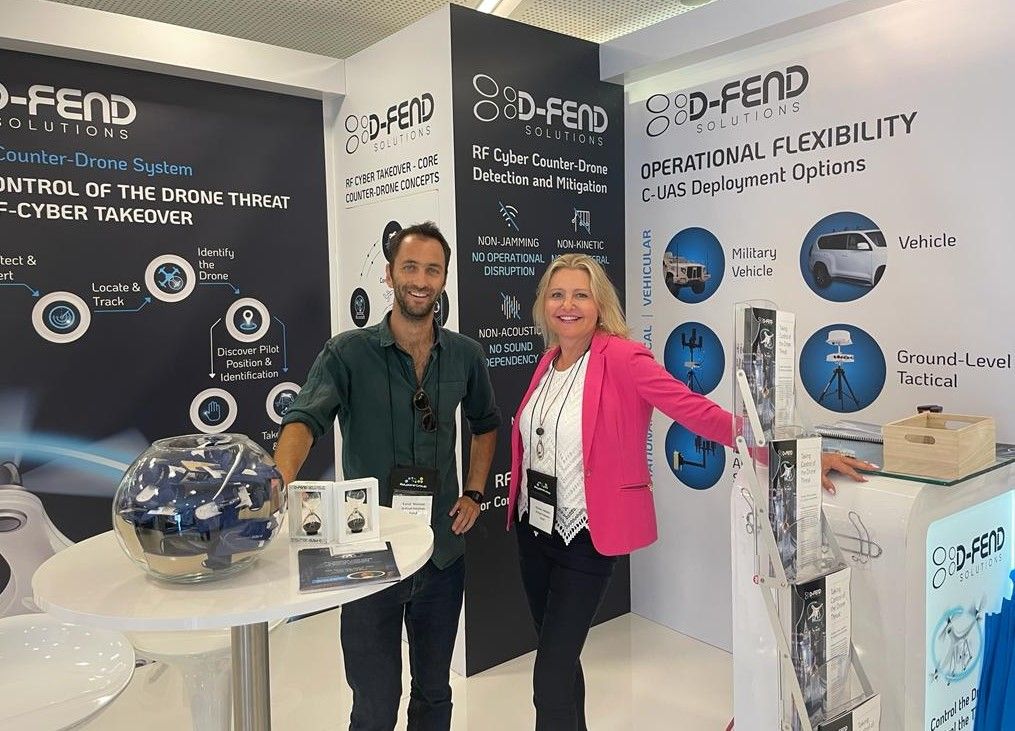
The best anti-drone system is the one that matches a clearly defined mission. Buyers need to compare the target set, protected area, deployment model, operating constraints, authorized response, and acceptable operational trade-offs. For environments that require controlled, non-jamming, and non-kinetic outcomes, D-Fend Solutions’EnforceAir is designed to meet those specific operating requirements. Its RF Cyber-Takeover capability supports taking control of supported unauthorized drones and landing them safely in a predefined area.
An anti-drone system can work exactly as designed and still fail the mission. Stopping a drone is not a successful outcome if the response also disrupts critical communications, leaves the drone’s path unpredictable, or sends debris over people and infrastructure.
This is what makes the search for the best anti-drone system more complex than only comparing range, response time, or feature lists. The technology must fit the threat, the environment, the authority, and the outcome the organization expects.
Separate the Core Capabilities Before Comparing Systems
Anti-drone systems can combine detection, tracking, identification, and mitigation, but these capabilities are not interchangeable. D-Fend Solutions’ C-UAS technologies overview explains the broader technology category. For procurement, the important distinction is the job assigned to each part of the system.
Detection
Detection provides awareness that drone activity may be present. Radar, RF Cyber, optical sensors, and acoustic sensors can contribute different types of awareness. The FAA separates UAS detection from mitigation and notes that detection alone does not determine intent or threat level.
Tracking
Tracking provides real-time location visibility of a detected drone and its flight path. When supported, it can also locate the pilot or remote controller and the drone’s home or take-off position, helping operators assess proximity to the protected area.
Identification and Assessment
Identification helps operators distinguish authorized activity from a possible threat. Required information may include drone type, location, direction of travel, and, when supported, the location of its pilot or remote controller.
Mitigation
Mitigation actively changes the situation after a threat is confirmed and action is authorized. Depending on the technology, the outcome may be disruption, physical disablement, destruction, redirection, takeover, or a controlled landing. Buyers should evaluate the likely outcome, not just the label attached to the method.
Five Criteria That Define Operational Fit
1. Threat Profile
Start with the drones the site is reasonably expected to face. Consider commercially available and custom-built UAVs, single and multiple drones, likely approach paths, and potential payloads. Ask suppliers which targets their system supports and how the system performs when a target falls outside that supported set.
An undefined threat produces a meaningless comparison. A prison focused on repeated contraband deliveries has a different operating picture from a military unit preparing for varied threats across changing terrain.
2. Required Operational Outcome
An alert may be sufficient for one organization. Another may require an authorized active response. Jamming can disrupt the connection between a drone and its pilot, with the next action dependent on the drone’s configuration. Kinetic methods can disable or destroy a UAV, with potential consequences from projectiles or falling debris. RF Cyber-Takeover is intended to take control of supported drones and guide them to a predefined landing area.
The required end state should be defined before products are compared. D-Fend Solutions’ mitigation overview provides a fuller comparison of response categories and outcomes.
3. Operational Continuity
The response should not create a larger problem than the original incident. Airports may need to maintain communications, navigation-dependent services, and aircraft movements. Critical facilities may need to preserve radio communications and normal operations. At a public venue, people below the flight path change the acceptable risk from debris or an uncontrolled landing.
Range and response speed are not enough. The system must also be judged by its effects on nearby systems, people, and ongoing operations.
4. Deployment Model
Counter-drone equipment may be stationary, vehicle-mounted, tactical, man-portable, or maritime-configured. A fixed facility may need persistent stationary coverage. A border or military team may need a vehicle-mounted configuration. A temporary event may favor a tactical kit that can be moved and set up as needed. Teams operating in hard-to-reach terrain may prioritize a backpack configuration, while naval, port, harbor, and coastal missions may require a maritime-specific configuration.
5. Cyber-Only, Integrated, or Layered Architecture
Some missions can be served by a cyber-only capability. Others may benefit from complementary sensors or response options. A layered system can broaden coverage or add verification, but it also brings integration, training, maintenance, and workflow considerations.
Layering is therefore an option, not a default requirement. When a broader architecture is appropriate, RF Cyber can serve as its foundational layer. EnforceAir PLUS combines RF Cyber with complementary detection and mitigation technologies in an integrated platform.
The Environment Changes the Shortlist
The same specification can have a very different value in different settings. These are the questions that move to the front in five common environments:
Rapid deployment, authorized-drone management, crowd location, debris risk, and a predefined response plan
Treat these as prompts, not fixed prescriptions. An airport may need temporary mobile coverage. A public-safety team may move one tactical capability between venues. A military site may use RF Cyber alone in one mission and a layered architecture in another. In every case, the operating concept should determine the shortlist.
Questions to Ask Before Shortlisting Counter-UAS Products
Technology evaluators should agree on these points before comparing demonstrations, brochures, or pricing:
Which drone types and flight profiles are in scope, and which can the system detect, identify, and actively mitigate?
What evidence can the supplier provide from comparable tests or deployments under relevant site conditions?
What information must an operator receive before making a decision?
Is the requirement awareness only, or is an active response authorized? What should happen to the drone and payload?
Are jamming, kinetic force, falling debris, or unpredictable flight acceptable at the site?
Does the mission require stationary, vehicle-mounted, tactical, man-portable backpack, maritime, or mixed deployments?
Which communications and operational systems must remain available?
Is cyber-only sufficient, or does the mission justify complementary layers and added integration?
What staffing, training, testing, and software-update requirements apply?
These questions turn a broad search for the best anti-drone system into a testable brief. Suppliers can then demonstrate performance against the buyer’s target set, site conditions, workflow, and required outcome.
Where EnforceAir Fits
D-Fend Solutions’ EnforceAir is designed for organizations seeking a controlled, non-jamming, and non-kinetic counter-UAS option. Its RF Cyber capability detects, locates, and identifies supported drones. Once mitigation is authorized, RF Cyber-Takeover supports taking control of a supported unauthorized drone and landing it safely in a predefined area, without disruption or kinetic force.
EnforceAir can be deployed in stationary, vehicular, tactical, or man-portable backpack configurations. A dedicated maritime version is available for naval and maritime environments. EnforceAir can operate as a cyber-only capability or as the foundational cyber layer in a broader architecture when complementary technologies are required.
Evaluators should validate EnforceAir against the supported target set, site geometry, deployment requirements, operating conditions, integrations, authority, and required outcome. For sites where control, continuity, and a predefined landing area are priorities, EnforceAir is designed around those requirements.
FAQ
What is the best anti-drone system?
There is no universal best system. The right choice meets the site’s defined threat profile, coverage, deployment, continuity, authority, and mitigation requirements.
Is a counter-drone device the same as an anti-UAV system?
A counter-drone device may provide one capability, such as detection or mitigation. An anti-UAV system can connect multiple capabilities into the operational workflow required by the mission.
When should an organization choose a layered counter-drone system?
A layered architecture is useful when the target set, environment, or need for additional verification calls for complementary technologies. However, every added layer brings integration, training, maintenance, and workflow requirements, so a larger system is not automatically a better fit. If RF Cyber alone meets the required target set and operational outcome, a cyber-only deployment may be sufficient.
Does non-kinetic always mean non-jamming?
No. Jamming is non-kinetic because it does not use physical force, but it is still signal-disruptive. RF Cyber-Takeover is a controlled non-kinetic approach that does not rely on jamming.
Daniel Amiel is a Pre-Sales professional at D-Fend Solutions, bringing experience in organizational learning, process improvement, and program leadership. He supports customer and partner engagement by presenting EnforceAir’s counter-drone capabilities and helping audiences understand how the system can support their operational requirements.
Subscribe to email updates
Sign up here to receive the latest news, upcoming events, webinars and industry best practice resources


 Subscribe to email updates