Effective drone countermeasures must do more than detect an unauthorized UAV. They should help security teams identify and track the aircraft, assess the potential risk, and where legally authorized, respond precisely without unnecessarily disrupting aviation, communications, navigation systems, or legitimate drone activity.
Drones are seemingly everywhere, becoming a major thorn in the side of airports and other industries. This increased accessibility brings heightened risks, making it essential to understand the potential threats, to develop optimal drone countermeasures.
Interference with Aviation
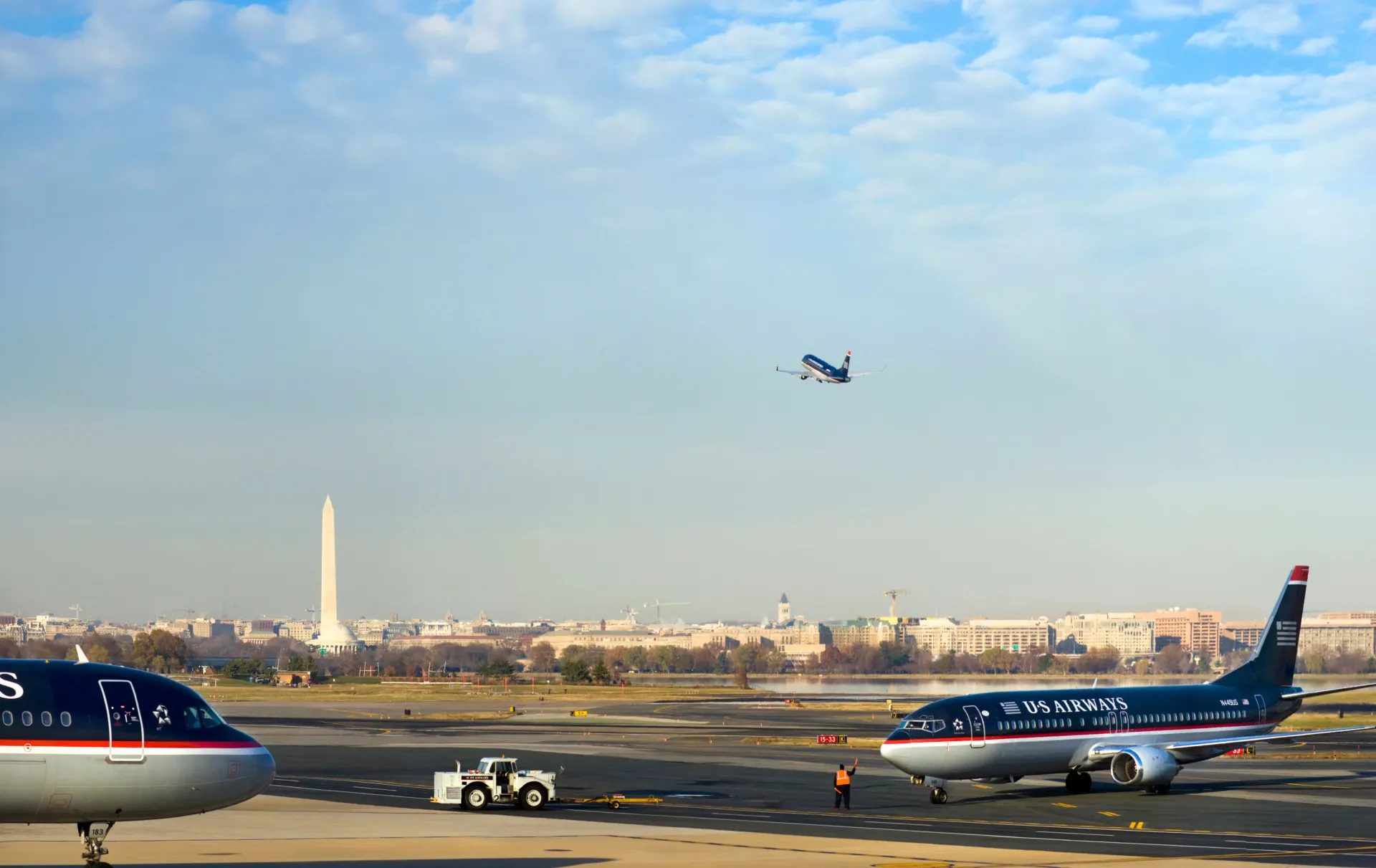
Drone sightings near airports have surged dramatically, posing a growing threat to aviation safety and spurring a search for the most effective drone countermeasures. Over 11,600 drone sightings were reported near U.S. airports from 2020-2025, according to FAA public records. The trend is clearly accelerating: 2025 recorded 1,860 sightings, the highest total since 2022, with Q1 2025 alone logging 410 incidents – a 25.8% increase over Q1 2024.
These numbers seem surprisingly low, considering how many drones are flying every day. Modern drones are smaller, quieter, and much more advanced than they were just a few years ago, which you’d think would make them harder to spot – yet reported sightings continue to rise. That could mean more drones are entering restricted airspace, or that awareness and reporting have improved.
Either way, the trend is worth paying attention to! And consequences aren’t just theoretical…
At least 28 incidents required pilots to take evasive actions from 2020-2025. The FAA receives more than 100 such reports near airports every month, underscoring that unauthorized drone activity has become a near-daily occurrence (FAA UAS Sightings Report).
As drone technology continues to evolve with longer flight ranges, higher speeds, and the ability to carry heavier payloads, even relatively inexpensive consumer drones can become serious hazards if they stray into an aircraft’s flight path.
This is a difficult balancing act for aviation authorities. They need to keep airspace safe, while figuring out how to detect, identify, and respond (when legally permitted) to unauthorized drones quickly, without causing unnecessary flight disruptions, introducing additional operational risks, or creating public alarm.
Weaponization by Terrorists
The weaponization of drones has become a growing concern for global security, particularly as terrorist groups have recognized the potential of commercially available drones for conducting low-cost, high-impact attacks. Drones are attractive to terrorists because they are relatively affordable, easily accessible, and require minimal training to operate. Militant groups have increasingly used drones to target airports, military assets, diplomatic sites, and critical infrastructure, including energy facilities and transportation hubs.
The ability to easily modify civilian drones for malicious purposes, such as reconnaissance or payload delivery, can make it difficult to distinguish a careless or legitimate operator from a potentially malicious one.
In conflict zones, weaponized drones have been deployed against military forces, further blurring the lines between combatants and civilians. The versatility of drones allows terrorist organizations to strike at strategic locations while maintaining distance, posing significant challenges for counter-UAS systems and drone countermeasures designed to detect and neutralize these threats.
Responding Without Disrupting Operational Continuity
Detecting an unauthorized drone is only half the battle. The next challenge is controlling it without disrupting everything else in the surrounding environment.
Unlike military environments, civilian airspace is incredibly busy. Airports are managing hundreds of flights, emergency services rely on wireless communications, broadcasters are transmitting live events, and countless authorized drones may already be operating nearby. Any counter-drone response must work within that environment, not shut it down.
That’s why drone countermeasures have become as much about precision as they are about protection. Broad measures that interfere with radio communications, GPS signals, or other critical systems can create new problems, especially around airports where navigation and communication are essential to flight safety.
Major sporting events highlight this challenge perfectly. Some stadiums have seen repeated incidents, despite extensive public awareness campaigns and clearly established no-fly zones.
What’s particularly interesting is that the overwhelming majority weren’t coordinated attacks. In many cases, they were hobbyists, content creators, or recreational pilots who either ignored or misunderstood the restrictions. Yet every unauthorized drone must still be treated as a potential threat, until proven otherwise.
That uncertainty makes counter-drone operations difficult.
Security teams can’t simply jam every signal or suspend nearby operations whenever a drone appears. During a live game or match, tens of thousands of spectators, broadcasters, emergency responders, helicopters, and legitimate communications must all continue operating normally. The same applies at airports, where even a brief disruption can ripple through flight schedules and affect thousands of passengers.
The goal isn’t just to stop the drone when doing so is legally authorized – it is to address the unauthorized drone only. That requires systems capable of accurately detecting, identifying, tracking, and mitigating unauthorized aircraft, while leaving surrounding communications, navigation systems, and legitimate operations untouched.
As drone activity increases and UAVs continue to evolve, maintaining this balance between security and operational continuity will become one of the defining challenges for airports and the future of counter-UAS technology.
The question is no longer simply whether we can detect a rogue drone. It is whether we can respond quickly, accurately, and safely, without creating new risks.
In a world where drones are becoming more capable and accessible daily, are our countermeasures evolving fast enough to stay ahead of the threat?
My next blog post in this series will explore how a layered approach to drone countermeasures can help address this challenge and improve detection, verification, and response.
FAQ
What are drone countermeasures?
Drone countermeasures are technologies and operational processes used to detect, identify, track and, where legally authorized, mitigate unauthorized UAVs.
Why is legacy drone detection not enough?
Legacy detection confirms that an object may be present, but operators still need information about the aircraft that can be obtained from cyber-detection: the drone’s location, behavior, and potential risk, before deciding how to respond.
Why must drone countermeasures be precise?
An imprecise response may affect surrounding communications, navigation systems, authorized aircraft, or essential operations. Precision helps security teams address the relevant drone, while minimizing wider disruption.
How can drone countermeasures support operational continuity?
They can provide security teams with the information and response capabilities needed to address unauthorized drone activity, while allowing legitimate aviation, communications and public operations to continue.
Ilana Brodesky, ACE, IACE, is the Director of Aviation, Public Safety, and Critical Infrastructure Business Development at D-Fend Solutions. She works organizations across North America to address the evolving threat posed by rogue drones. Leveraging her expertise in counter-drone technologies, she helps security leaders understand how to effectively detect, assess, and mitigate sUAS threats while maintaining safe, secure, and uninterrupted operations in complex and sensitive environments.
Subscribe to email updates
Sign up here to receive the latest news, upcoming events, webinars and industry best practice resources


 Subscribe to email updates