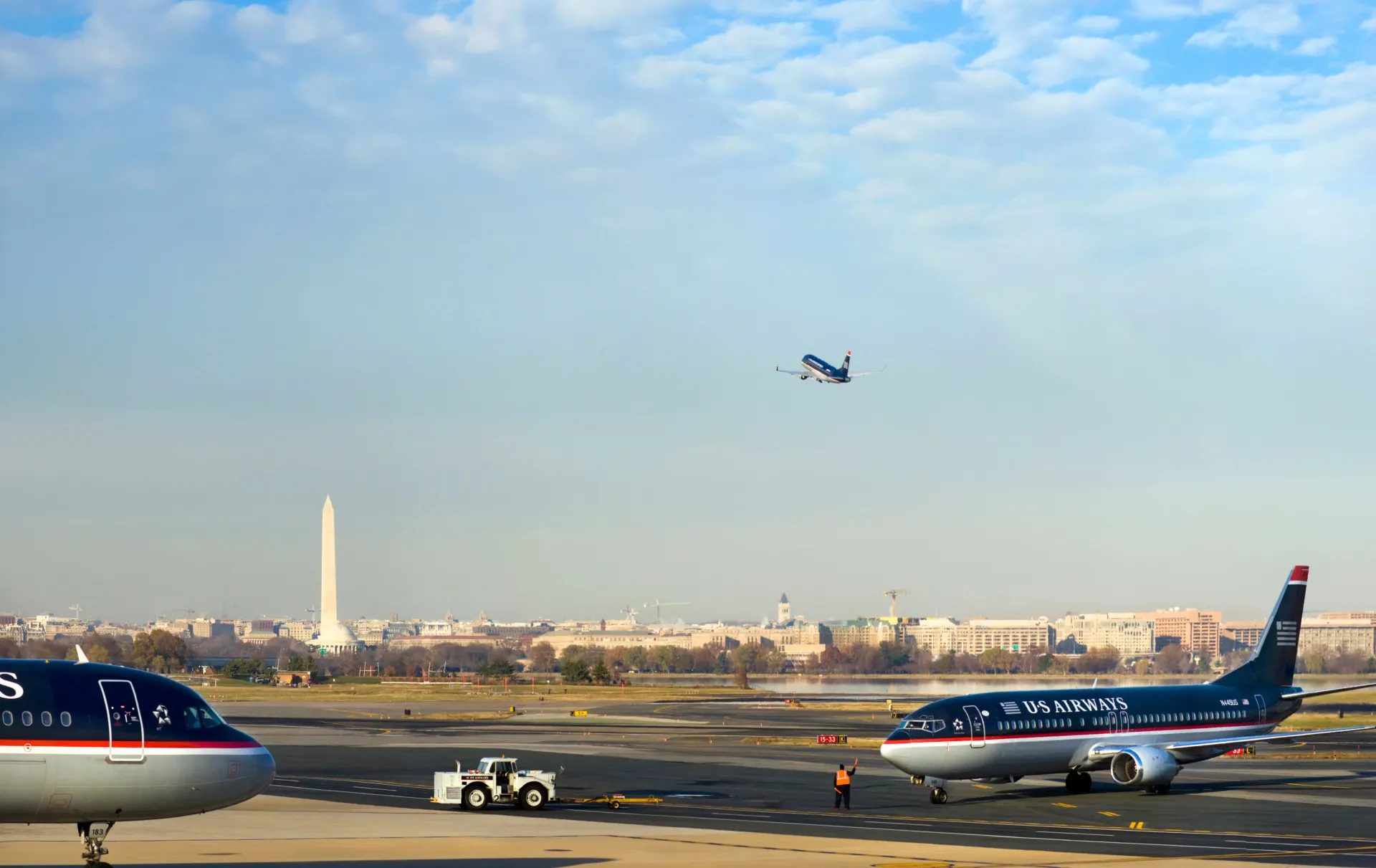
Each month, we examine a representative selection of verified rogue drone activity from the Drone Attack & Incident Tracker, spanning critical sectors worldwide. The purpose of this series is to give security leaders, counter-drone professionals, and operational decision-makers a factual view of how unauthorized drone activity is evolving in sectors such as airports & aviation, stadiums & arenas, prisons, military & special forces, and landmarks & government buildings. The series not only documents incidents but also highlights operational insights that can help inform stronger counter-UAS initiatives.
Airports and Aviation
Rogue drone activity near airports presents a growing threat to aviation safety, causing flight disruptions, serious security risks, and significant financial consequences. As drone technology becomes increasingly accessible, robust counter-drone security at airports has become not just advisable, but essential.
The risk of a rogue drone colliding with a commercial aircraft or being weaponized in a terror attack has led airports worldwide to seek effective counter-drone technologies tailored to their complex operational environments. A stark illustration of what is at stake occurred on 20th February 2026, when a Myanmar National Airlines ATR-72-600 was struck by an alleged First-Person View (FPV) drone attack while preparing for take-off at Myitkyina Airport.
State media reported that the suicide drones caused damage to the nose, mid-body, and tail of the aircraft. Air defence systems detected the incoming threat in time to prevent direct detonation inside the airport perimeter, and no passengers or crew were injured. The incident is part of a broader pattern in Myanmar where commercially modified FPV drones have been increasingly deployed against aviation infrastructure including military helicopters, airbases, and now civilian passenger aircraft.
Airports must invest in precise, non-disruptive counter-drone systems capable of both identifying and, when allowed by regulations and performed by authorized personnel, mitigating threats before an incident with far graver consequences occurs, while preserving airport communications, navigation, air traffic services, and overall continuity of operations.
Stadiums and High-Profile Public Events
Rogue drone activity is appearing with increasing frequency above packed stadiums, arenas, and major entertainment venues around the world, triggering delays, safety stoppages, and security investigations. The risks they pose to spectators, athletes, VIPs, staff, and venue infrastructure alike have made reliable drone detection and protection measures an urgent priority for large-scale event operators.
What makes the stadium environment particularly challenging is that many conventional counter-drone tools struggle to function effectively within it. A recent incident in Seattle on 11th February 2026, during the Seahawks’ Super Bowl victory parade at Lumen Field demonstrated this complexity. Authorities recorded at least 30 drones flying over the event, which had hundreds of thousands of attendees. One pilot, ignoring repeated warnings and active flight restrictions, flew his drone directly into the stadium and now faces reckless endangerment charges as well as potential federal penalties. The incident drew immediate attention from Washington state officials.
Venues cannot rely on traditional counter-drone systems or ad hoc responses to manage drone threats. As events grow in scale and profile, so does their attractiveness as targets. Purpose-built stadium drone detection systems capable of performing reliably amid noise, crowds, and complex airspace have become a fundamental component of modern venue security, enabling operators to distinguish authorized broadcast and security drones from non-cooperative, unauthorized systems and to manage them safely and non-disruptively.
Prisons
The widespread availability of commercial drones has fundamentally changed the contraband smuggling landscape for prisons and correctional facilities. Criminals now have the ability to fly illicit packages carrying drugs, mobile phones, weapons, and other prohibited items directly over perimeter walls and into prison yards, through windows, and onto rooftops, entirely bypassing the ground-level security measures that facilities have traditionally relied upon.
The consequences extend well beyond the delivery of contraband. These incursions actively erode institutional discipline and provide fuel for gang networks and organized criminal operations both inside and outside prison walls, placing staff, inmates, and the wider public at heightened risk.
A recent incident in Georgia illustrates the scale and organisation behind these operations. In early February 2026 on the 5th, authorities intercepted a drone smuggling attempt targeting Hancock State Prison near Sparta, following a traffic stop close to the Hancock-Baldwin County line. Two individuals, Timothy Lamar Massengale and Angela Renee Dinkins, both aged 35 were arrested after deputies detected the smell of marijuana from their vehicle and discovered, in plain view, a high-value drone estimated to be worth between $20,000 and $25,000. A subsequent search uncovered a substantial cache of contraband believed to be destined for the prison: 11.5 pounds of marijuana, 44 pounds of tobacco, 11 mobile phones, an iPad, charging cables, assorted medications, cash, and an array of tools and accessories. The operation involved coordinated assistance from multiple law enforcement agencies, including the Milledgeville Police Department, the Hancock County Sheriff’s Office, and investigators from the Georgia Department of Corrections, a reflection of how seriously authorities are treating the drone smuggling threat.
The Hancock case is not an isolated event but part of a rapidly escalating pattern playing out at correctional facilities across the country and internationally. Addressing it demands purpose-built counter-drone solutions designed specifically for the correctional environment systems capable of detecting drone incursions reliably, without disrupting legitimate facility operations, and of taking control of rogue drones to enable safe landings, contraband confiscation and follow-up investigation of pilots and launch points.
Military units and special forces
Elite military units and special forces routinely operate in the most demanding, high-stakes environments, where control of the airspace above can be as decisive as any ground-based tactical advantage. Even within secured home installations, rogue drone activity represents a serious and unpredictable vulnerability. On the 1st February 2026, local police in Fort Kochi, Kerala, registered a case after two tourists flew a drone near the Indian Navy’s INS Dronacharya facility, a sensitive naval training establishment in a designated red-zone where drone operations are prohibited. The drone was seized and legal action initiated under applicable aviation and public safety regulations. Even when incidents ultimately prove non-malicious, they underscore the need for continuous airspace monitoring and controlled, non-kinetic mitigation that does not reveal defensive posture or interfere with mission-critical communications and operations.
Landmarks and Govt Buildings
During the Thaipusam festival at Sri Subramaniar Temple in Ipoh, Malaysia, the Drone Unit of the Police Air Wing detained an 80-year-old man for operating a drone over the crowded site without a permit from the Civil Aviation Authority of Malaysia an incident that, while resolved without harm, underlines how routine and effortless unauthorized drone flights have become.
The ease with which commercially available drones can be purchased and deployed means that directing a flying object potentially carrying an explosive payload toward a national monument, government building, or critical public facility has never been more achievable. No specialist knowledge or significant expenditure is required.
The threat is not confined to physical attack alone: small unmanned systems are equally well suited to covert surveillance and reconnaissance, capable of gathering detailed intelligence on sites that would otherwise be extremely difficult to penetrate. As drone technology continues to advance and proliferate, protecting sensitive infrastructure demands purpose-built detection and response systems that can identify and take control of unauthorized aerial activity before it escalates into something far more serious, while allowing authorized drones and essential communications to continue operating uninterrupted.
Staying Ahead
February 2026 painted a clear cross-sector picture of just how widespread and brazen unauthorized drone activity has become. Read our previous blog to understand the drone threat activity in the month of January 2026. Security professionals seeking counter-drone solutions need end-to-end detection and mitigation, providing situational awareness, operational continuity, safe landing and controlled outcomes.
D-Fend Solutions’ EnforceAir is a high-performance counter-drone system combining cyber-driven, non-kinetic, AI-enhanced capabilities built around the world’s preeminent radio-frequency (RF) cyber takeover technology to address rogue drone challenges across diverse sectors, environments, and operational contexts.
FAQ: Rogue Drone Activity – February 2026 Report
What trends are emerging in rogue drone activity?
Rogue drone activity in February shows a rise in incidents near critical infrastructure such as airports, prisons, and public events, often involving commercially available drones.
Why are airports particularly vulnerable to rogue drone activity?
Airports rely on tightly controlled airspace. Even small drones can disrupt flight operations, forcing precautionary runway closures or delays.
How are prisons responding to drone-based contraband smuggling?
Correctional facilities are deploying specialized counter-UAS systems to detect drones, intercept smuggling attempts, and identify operators.
Why is rogue drone activity difficult to manage at large public events?
Stadiums and major events have dense crowds and heavy radio-frequency congestion, which makes detecting and safely managing unauthorized drones more complex.
Meryl Dzikansky is the Marketing Content Manager at D-Fend Solutions, where she combines analytical insight with creative strategy to develop impactful content. She closely tracks global drone incidents and trends, focusing on branding, messaging, and the evolving counter-drone landscape.
Subscribe to email updates
Sign up here to receive the latest news, upcoming events, webinars and industry best practice resources



 Subscribe to email updates