Drone airspace security at a major event combines trained personnel, shared situational awareness, interagency coordination, and response capabilities that preserve communications and public safety. During the 2026 FIFA World Cup,D-Fend Solutions’ EnforceAir platform was deployed across multiple North American host cities and selected by more than 20 public safety agencies to protect matches, surrounding venues, and critical infrastructure from unauthorized drone activity.
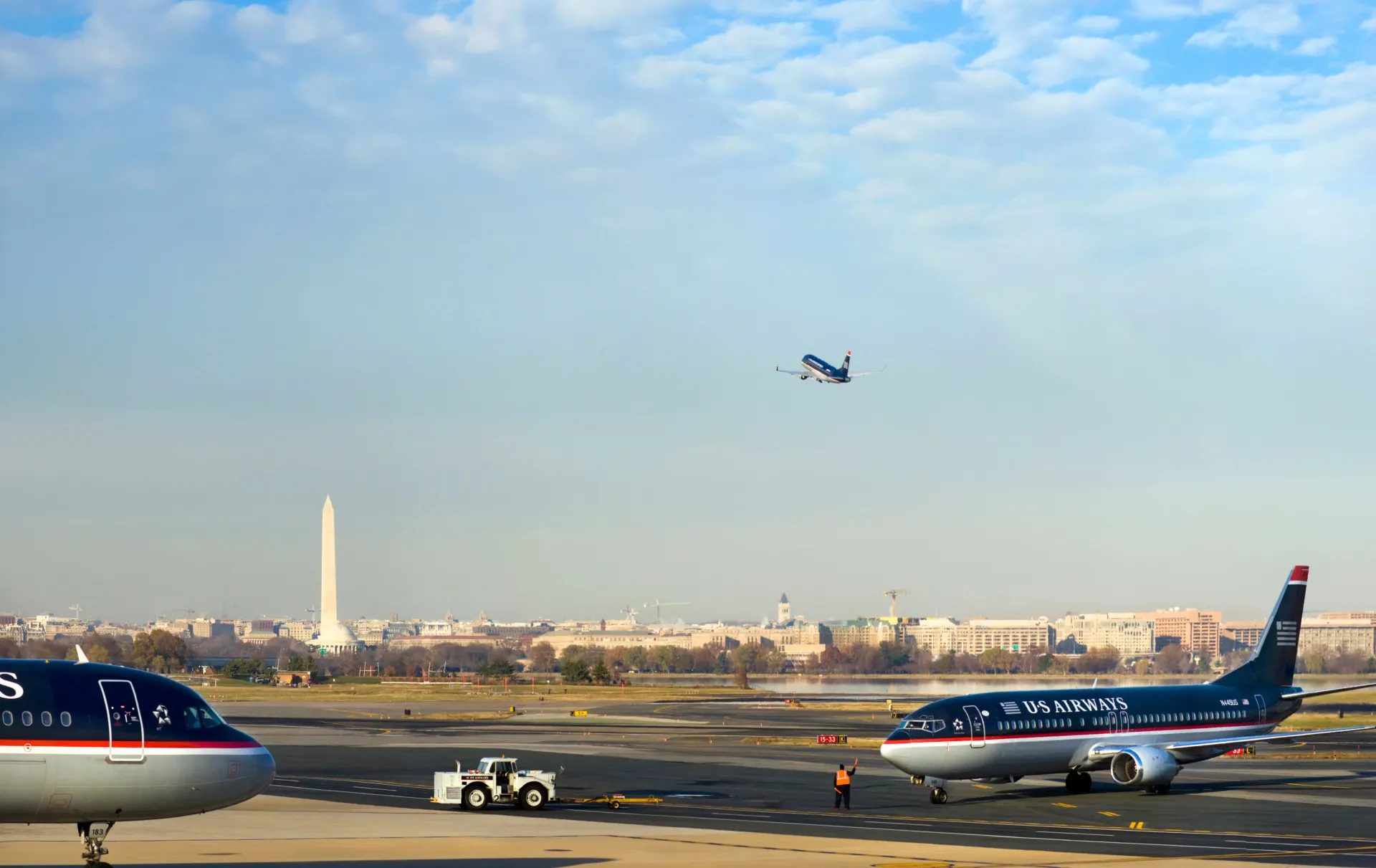
World Cup, with matches hosted in 11 U.S. cities, and additional venues in Mexico and Canada, public attention remained fixed squarely on the pitch. Yet high above packed stadiums, bustling fan zones, and international airports, a quiet revolution in drone airspace security unfolded without disrupting a single match, cellular signal, or private data exchange. Operating seamlessly behind the scenes, D-Fend Solutions’ EnforceAir2 system served as an invisible backbone of modern counter-drone operations, proving that the safest airspace defense is one the public never notices.
The Difference in a Safety-First, Security-Always Approach
Some counter-drone systems, such as high-powered radio frequency jamming, net capture, or kinetic projectiles, can pose severe operational risks in dense urban settings. Jamming can disrupt critical airport navigation systems, local police frequencies, and emergency medical communications, while kinetic interception risks dropping drones into crowded fan festivals.
EnforceAir2 minimizes these risks through discreet and accurate radio frequency (RF) cyber-takeover technology. By passively detecting drone communications, taking control of unauthorized drones mid-flight, and guiding them to safe, pre-designated landing zones, security teams were able to neutralize threats without causing collateral damage, disrupting sensitive communications, or disturbing the main event.
This deployment across 11 U.S. metropolitan hubs served as definitive real-world validation of the SAFER SKIES Act and the long-sought-after expansion of counter-drone authorities from federal agencies to state and local law enforcement. Enacted under the FY2026 NDAA, the landmark legislation expanded drone detection and mitigation authority beyond federal agencies to trained State, Local, Tribal, and Territorial (SLTT) law enforcement.
The World Cup demonstrated that SLTT agencies are fully capable of managing complex, high-stakes airspace defense when equipped with the right tools and training.
Unified Interoperability: Local municipal police, state troopers, and federal personnel were able to operate off a common situational awareness platform to secure airspace over venues, transit corridors, and airports.
Non-Kinetic Precision: RF-cyber takeover enabled officers to interdict non-compliant and threatening drones while maintaining uninterrupted broadcasts, commercial operations, and public Wi-Fi.
A Scalable SLTT Model: The tournament established a standardized blueprint for municipal law enforcement to lawfully safeguard critical infrastructure and major public gatherings.
By delivering flawless airspace protection across the nation’s largest airports, sporting events, and fan zones, SLTT law enforcement and EnforceAir2 set a new global benchmark, proving that public safety and true airspace security is defined by what remains entirely unseen.
Seamless Integration with UTM and C2 Ecosystems
Beyond point protection, modern drone airspace defense requires integration with Unmanned Traffic Management (UTM) platforms and centralized Command and Control (C2) systems. EnforceAir2 connects directly to broader operational networks via open APIs and D-Fend’s Multi-Sensor Command & Control (MSC2) management platform.
By integrating with real-time UTM data feeds, the operator can actively track flight plans to distinguish authorized commercial operations from non-compliant or hostile aircraft. EnforceAir2 can stream rich, real-time drone threat data—including precise drone and pilot positions, drone altitude, speed, direction, and drone serial numbers—directly into municipal, state, and federal Emergency Operations Centers (EOCs). This establishes a single Common Operating Picture (COP) across participating agencies, enabling multi-layered threat evaluation, multi-sensor orchestration, and automated target handoffs without overloading field operators.
A Drone Airspace Security Model for Future Major Events
The World Cup showed what effective drone airspace security should look like at major public events: coordinated, precise, and largely invisible to the people it protects. For SLTT agencies, success is not simply detecting an unauthorized drone. It is understanding the threat, coordinating across agencies, and safely resolving the incident without disrupting communications, operations, or the public experience below.
As cities prepare for future sporting events, public gatherings, VIP movements, and transportation-security operations, they need a scalable model that pairs trained personnel with shared situational awareness and non-kinetic mitigation capabilities. The standard should be clear: protect the airspace, preserve essential services, and keep the focus where it belongs: on the event, not the threat above it.
FAQ
What is drone airspace security at a major event?
Drone airspace security combines drone detection, threat assessment, interagency coordination, and authorized mitigation. At a major event, the objective is to protect the airspace without disrupting communications, operations, or the public experience.
What role did EnforceAir2 play in World Cup airspace security?
EnforceAir2 was deployed across multiple North American host cities and selected by more than 20 public safety agencies to protect matches, surrounding venues, and critical infrastructure from unauthorized drone activity during the World Cup.
Why can jamming and kinetic mitigation create challenges at stadiums?
Jamming may disrupt airport navigation, police frequencies, emergency communications, and other systems operating near a stadium. Kinetic mitigation may create falling debris, presenting additional risks in crowded public environments.
How do UTM and C2 integration support drone airspace security?
UTM data helps operators distinguish authorized commercial drone operations from unauthorized activity. Integration with C2 platforms supports a Common Operating Picture, allowing municipal, state, and federal agencies to coordinate their response.
What do SLTT agencies need for drone airspace security at future events?
SLTT agencies need trained personnel, shared situational awareness, interagency coordination, and non-kinetic mitigation capabilities. Together, these elements support a scalable approach to protecting venues, transit corridors, airports, and surrounding infrastructure.
Brett Feddersen serves as Vice President, Strategy and Governmental Affairs, leading the company’s strategy, public policy, and government relations efforts and engagements with various government policymakers and decision-makers. He also plays a crucial role in identifying key legislative trends, managing corporate risks, building coalitions and enhancing D-Fend Solutions’ influence and reach in counter-drone innovation.
Subscribe to email updates
Sign up here to receive the latest news, upcoming events, webinars and industry best practice resources



 Subscribe to email updates